
America’s 250 Years of Poetry: A Living Tapestry of Voice, Vision, and Change
For 250 years, American poetry has evolved alongside the nation itself…shaped by revolution, reinvention, conflict, and cultural transformation. The story of American poetry is, in many ways, the story of America: restless, independent, and always reaching for a deeper sense of identity. As the country marks its 250th anniversary, it’s the perfect moment to look back at how poets have captured the heartbeat of a growing nation.
The Revolutionary Roots (1776–1830)
American poetry began as an act of definition. Early poets like Phillis Wheatley and Philip Freneau wrote during a time when the course of a new nation was still being charted. Their work blended Enlightenment ideals with the raw urgency of independence. Wheatley, an enslaved woman who became the first published African American poet, used neoclassical forms to assert both her humanity and her intellect…an act of literary rebellion.
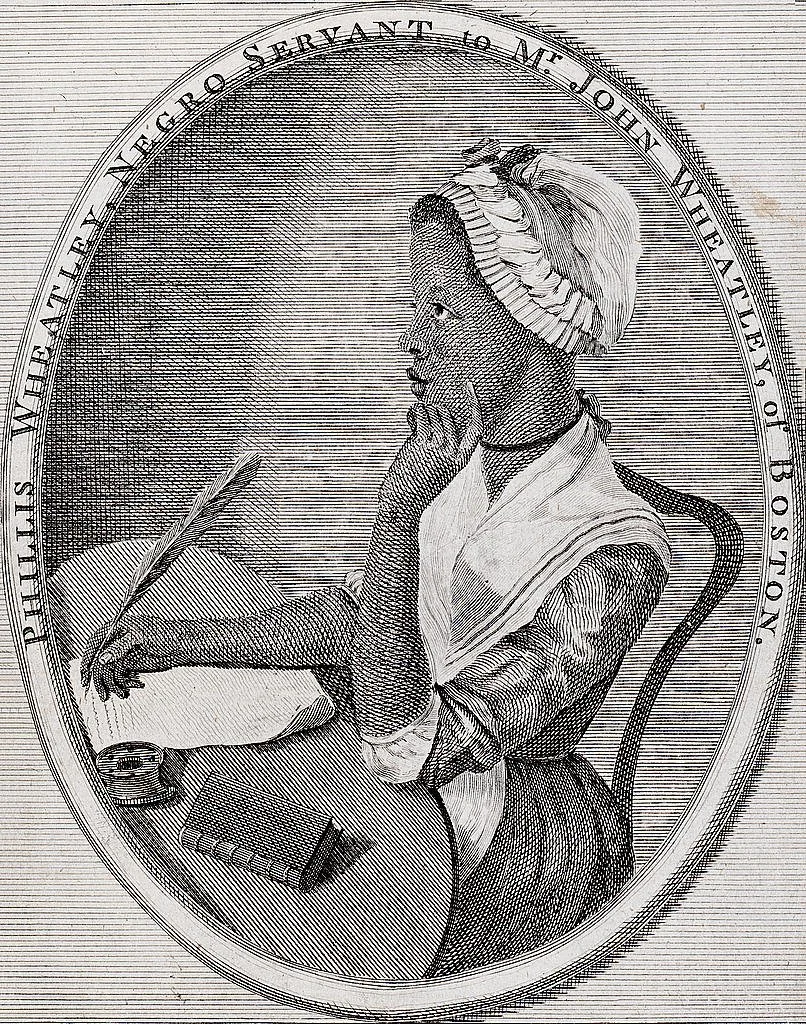
Phillis Wheatley, an enslaved woman, was the first published African American poet. She paved the way in the early days for others.
These early voices set the stage for a uniquely American poetic identity: bold, idealistic, and unafraid to challenge the status quo.
The American Renaissance (1830–1865)
By the mid-19th century, American poetry had found its swagger. This era produced giants like Walt Whitman and Emily Dickinson, whose radically different styles expanded the boundaries of poetic expression.
Whitman’s sweeping free verse celebrated democracy, the body, and the everyday worker. Dickinson, writing privately in Amherst, compressed the universe into short, enigmatic lines that still feel modern. Together, they embodied the duality of the American spirit: expansive and introspective, public and private, loud and quiet.
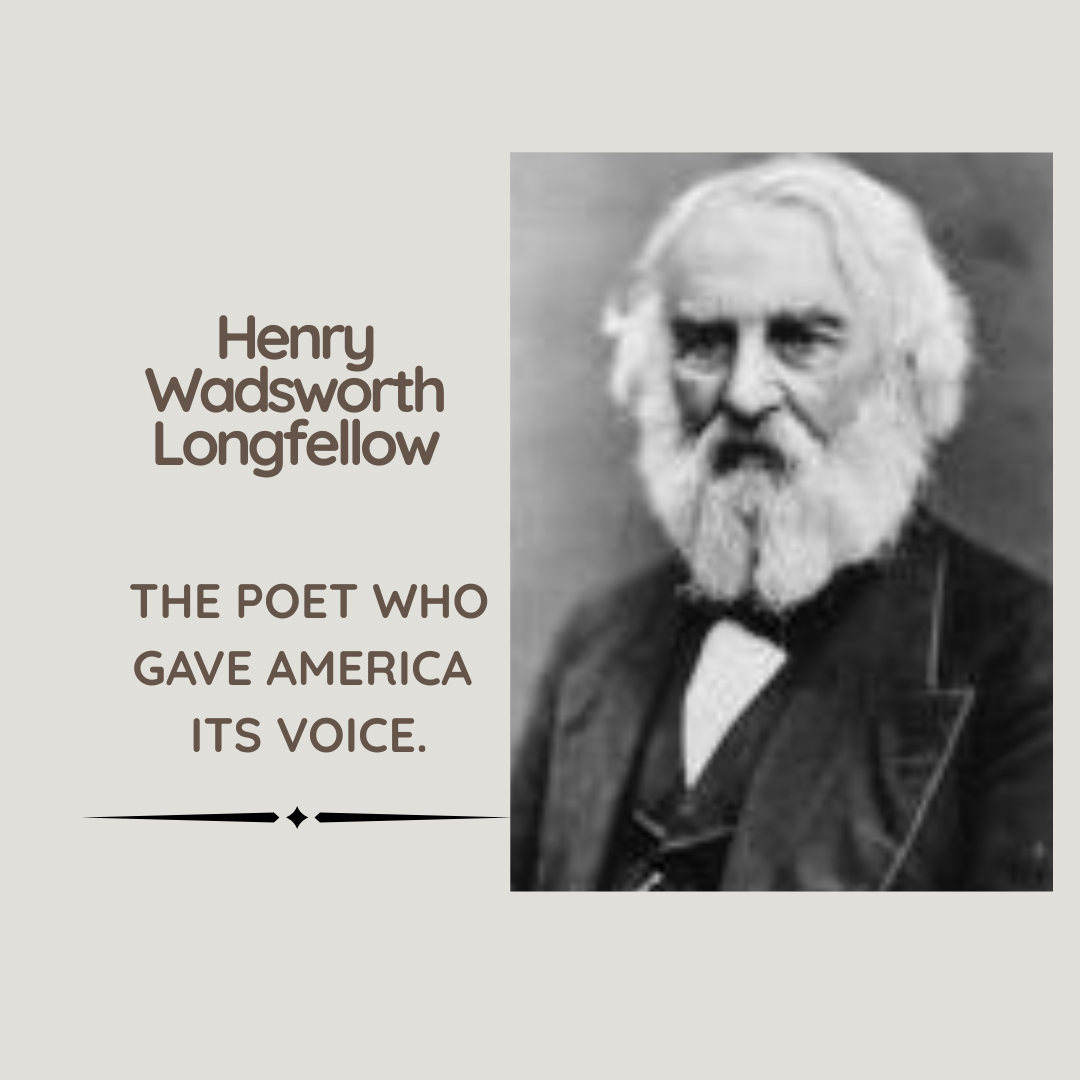
The Arrow and the Song and The Psalm of Life are two of Longfellow’s most cherished pieces of poetry, and are still read today.
This period also gave rise to Henry Wadsworth Longfellow, whose narrative poems…especially “Paul Revere’s Ride”…helped shape the nation’s memory of its own beginnings. His work remains one of the most accessible bridges between the Revolutionary era and today.
Modernism and the Urban Imagination (1900–1950)
As America industrialized, poetry shifted again. Modernist poets like T. S. Eliot and Ezra Pound broke traditional forms to reflect a fractured, fast-changing world.
Meanwhile, the Harlem Renaissance brought a surge of Black artistic brilliance. Langston Hughes, Gwendolyn Bennett, and others infused poetry with jazz rhythms, spirituals, and the lived experience of Black America. Their work reshaped the nation’s cultural landscape and expanded who poetry was for.
Postwar Voices and Countercultural Currents (1950–1980)
After World War II, American poetry became a battleground of ideas and identities.
The Beat poets, including Allen Ginsberg, rejected conformity and embraced spontaneity, spirituality, and protest. Confessional poets like Sylvia Plath and Robert Lowell turned inward, exploring mental health, family, and trauma with unprecedented candor. Indigenous, Latino, and Asian American poets gained wider recognition, adding new textures to the national voice.
American poetry was no longer a single thread…it had become a tapestry.
The Expanding Chorus (1980–Today)
Over the last 40 years, American poetry has grown more diverse, more accessible, and more experimental than ever.
Spoken word and slam poetry brought poetry back into public spaces. Poets such as Joy Harjo, the first Native American U.S. Poet Laureate, foregrounded Indigenous histories and futures. Writers like Ocean Vuong and Ada Limón blend lyricism with themes of migration, ecology, and identity. Digital platforms have democratized poetry, allowing new voices to emerge from every corner of the country.
Arthur Sze, America’s current Poet Laureate, is the first Asian American to hold the U.S. Poet Laureate title, marking a significant milestone in the history of the position. Sze’s role is to raise national awareness and appreciation of poetry, with the position allowing him flexibility to pursue personal projects, curate readings, and engage the public in literary awareness. United States Poet Laureate - Wikipedia
And through it all, Robert Frost’s “The Road Not Taken” remains one of the most beloved American poems, its meditation on choice and individuality echoing the nation’s ongoing journey.
Poetry at 250: A Living Legacy
As America celebrates its 250th anniversary, its poetry stands as a testament to resilience, reinvention, and the power of language to shape national identity. From Wheatley’s classical poise to Limón’s ecological lyricism, American poets have continually asked: Who are we? What do we value? How do we live together?
The answers have never been simple, but that complexity is the beauty of the American poetic tradition. It is a chorus of contradictions, a record of struggle and triumph, and a reminder that the nation’s story is still being written.
Two hundred fifty years of voices rising,
stitched across a continent of change.
From whispered quill to digital horizon,
the nation’s song keeps widening its range.
and still we write…through hope, through
trial… to find the truth of who we are.
A chorus carried mile by mile, a lantern lifted
in the dark, a steady, human star...America.