
When Mist Becomes a Messenger
The Quiet Arrival of the Unseen
There are moments in nature when the world seems to exhale…slowly, gently, almost imperceptibly until everything familiar becomes softened at the edges. My poem, The Milky Mist, dwells in one of those moments, capturing the quiet mystery that rises after rain, when twilight is neither day nor night but something suspended between. Mist has always carried an air of mystery, but in the poem, it becomes a character, a messenger, and a veil through which the ordinary world is transformed.
Mist often comes on quickly. It doesn’t announce itself; it arrives like a secret. It creeps through wooded vales, wraps around the feet, and blurs the eyes of night. I invite you to experience twilight not as a fading of light but as a shifting of perception. What we see becomes less important than what we feel.
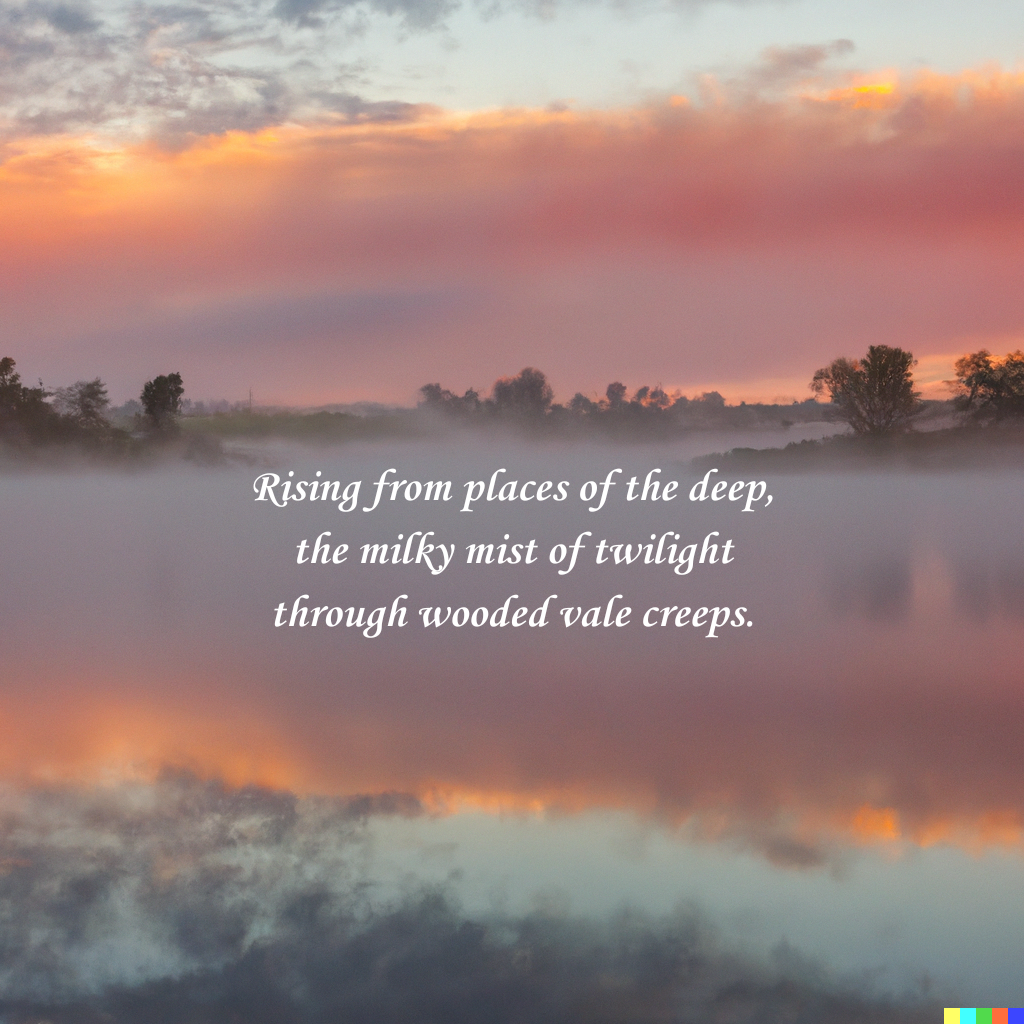
Mist sweeps across the field and winds its way around the trees.
There is a beautiful solitude in a misty scene: a country lane, amber windowpanes glowing in the dusk, and someone walking alone after the evening rain. Mist often appears when the world is quiet…after storms, after sunset, after the day’s noise has dissolved. It is a companion for those who wander, those who notice, those who pause long enough to see the world in its softer moods. Mist is not merely present but actively painting the landscape, turning familiar paths into something dreamlike, but what is the science behind the formation of mist? Learn more here.
The Mist That Speaks Without Sound
Mist can sometimes speak to us “in silent syllables,” commanding all to yield. A silence that speaks, meekness that commands…captures the essence of mist. It does not roar like thunder or blaze like sunlight. Its power lies in subtlety. It seeps across the earth slow but sure. Mist quiets the world. It slows movement. It invites reflection. It asks us to surrender our need for clarity and instead embrace the beauty of what is partially hidden.
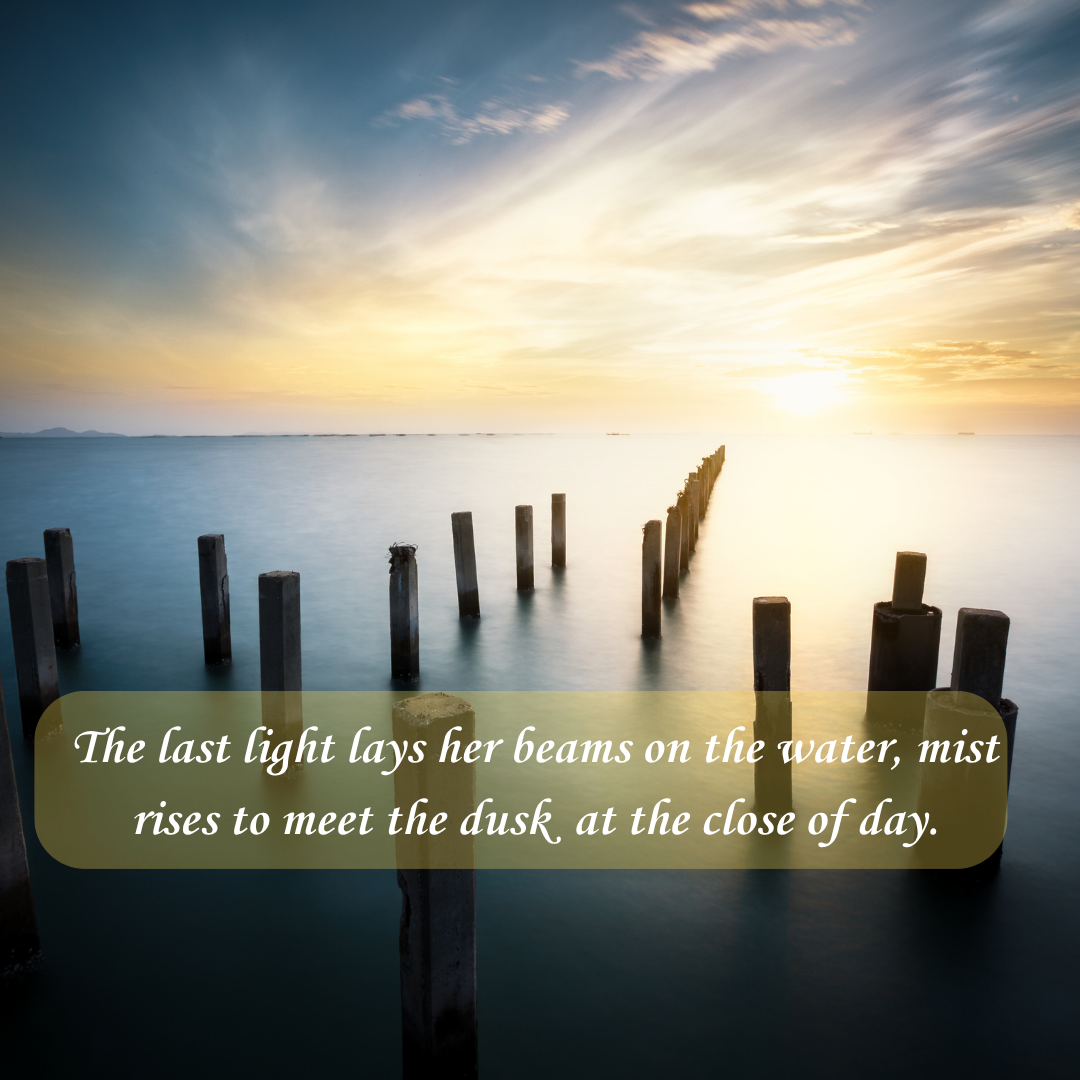
The last light of day when mist clouds the way.
Mist can also be a blessing in that it provides hydration for plants, tress and the land. It brings “a shower of pearls from the cloud disguised.” Droplets cling to surfaces, catching the faintest light, turning the ordinary into something jeweled. Mist prepares the world for dawn’s renewal when the parade of butterflies will visit each bloom.
Lingering in the Softness Before Dawn
Mist can become all enveloping, so thick that the eye cannot see what lies ahead. It can obscure the coming morning’s light. It can be tender and haunting. Mist can disorient, but it can also protect. It shields the world from harshness, offering a temporary refuge where everything is softened, slowed, and simplified. Losing sight of morning is not a loss but an invitation to linger in the mystery a little longer.
The Milky Mist is a reminder that beauty often arrives quietly, in pale veils and whispered syllables, asking nothing more than our attention. It is a meditation on transition between day and night, clarity and obscurity, solitude and wonder. Mist teaches us to appreciate what is fleeting, delicate, and half‑seen. It invites us to walk slowly, breathe deeply, and let the world blur just enough for mystery to slip through. Enjoy the poem!
The Milky Mist
Rising from places of the deep,
The milky mist of twilight
Through wooded vale creeps,
And entangles my feet as it
Beclouds the eyes of night.
It came after the evening rain
When no one was in sight,
As I walked the country lane
And glanced into amber panes,
To brush the eve in pale white.
In silent syllables it speaks
A command for all to yield,
In a voice mysterious and meek,
For those that light would seek,
And to every creature of the field.
It swept the village in surprise,
Bringing a shower of pearls
From the cloud disguised
For the parade of butterflies,
When the morning blooms unfurl.
It mingled through the night,
Between woods and the lake
Causing me to lose sight
Of the coming morning’s light
When it would settle in the vale.
Riding on the morning’s waves
The wispy clouds heard the sigh,
When the sun opened the day
To disperse the dusky shades
For their time had drawn nigh.